
The Trump administration is about to release the findings of its investigation into excess industrial capacity in 16 trading partners, Reuters reported on November 24. Three people with knowledge of the matter told the news agency that new import duties on a wide range of goods are expected. Bloomberg News, citing a person familiar with the matter, reported that the announcement could come as soon as November 24.
As of the morning of November 25, the Office of the U.S. Trade Representative (USTR) had not posted the findings on its press release page. USTR declined to comment to Bloomberg. The White House did not respond to Reuters or Bloomberg.
The investigation covers China, the European Union, India, Japan, South Korea, Mexico, Vietnam, Taiwan, Thailand, Malaysia, Indonesia, Switzerland, Norway, Singapore, Bangladesh and Cambodia, according to Reuters. USTR opened it in March under Section 301 of the Trade Act of 1974, which lets the president impose tariffs to answer unfair trade practices. The new duties would partly replace the tariffs the U.S. Supreme Court struck down in February, Reuters reported.
What the rates could look like
Tariff rates, product coverage and the effective date remain unclear, Bloomberg reported. One of the people told Reuters that the duties would be set country by country. The same person said goods from Mexico and Norway are unlikely to face immediate levies.
The White House is expected to honor the tariff caps in finalized trade deals, the person told Reuters. Those caps are 15% for the European Union, Japan and South Korea, and 19% for Malaysia. For China, Reuters reported, the U.S. is expected to keep its 20% cap on second-term tariffs. That holds as long as the trade truce that expires on January 10 is extended.
Sourcing Journal, citing The Wall Street Journal, reported that India and Vietnam could face higher duties than partners with trade deals. The new tariffs will likely exclude certain metals and cars that already carry Section 232 duties, the publication reported.
Ryan Majerus, a former senior Commerce Department trade official who is now a partner at King & Spalding, told Reuters the administration could propose rates of 15% to 25%. He said those duties would stack on top of existing tariffs of 10% or 12.5% from a separate Section 301 investigation into forced-labor enforcement. He also said the administration could instead propose lower rates with escalation clauses that rise over time.
Proposed rates are not final
A source familiar with Taiwan-U.S. trade affairs told the Taipei Times that the proposed rates will be procedural recommendations, not final decisions. Executive Yuan spokesperson Michelle Lee said Washington must still hold public hearings and complete other steps before it sets final rates, the newspaper reported.
The earlier forced-labor case followed that pattern. USTR released its report on June 2 and announced its final tariff determinations on July 23, according to the Taipei Times.
What it means for manufacturers
Manufacturers and distributors that buy from any of the 16 economies can prepare before the findings appear. Start with a list of purchased items by country of origin and HTS code, with annual spend for each. Mark the lines that already carry Section 232 duties on metals or autos, since reports say those may be treated separately.
Then run two scenarios: an added duty of 15% and one of 25%, the range Majerus described. Our guide on how to calculate landed cost and the free landed cost calculator show how a duty change flows into unit cost. Items whose margin drops the most are the first candidates for price reviews or a second supplier.
If this case follows the forced-labor timeline, several weeks could pass between proposed and final rates. That window is the time to talk to suppliers about origin, pricing and lead times. For more options, see practical ways manufacturers reduce tariff exposure and our supplier diversification strategy guide.
Want to see what a 15% or 25% duty would do to your landed cost, item by item?
Contact usSources
- Reuters via The Globe and Mail, “Trump administration set to unveil new tariffs after probe on excess factory capacity, sources say” (Nov. 24, 2026)
- Bloomberg News via Transport Topics, “U.S. readies tariff hike on China, EU goods” (Nov. 24, 2026)
- Office of the U.S. Trade Representative, press releases (checked Nov. 25, 2026; latest release dated Nov. 19)
Additional sources
- Sourcing Journal, “Washington Prepares to Deploy New Section 301 Tariffs Over Excess Industrial Capacity Charges” (Nov. 24, 2026), which cites The Wall Street Journal on likely rates for India and Vietnam and on Section 232 exclusions.
- Taipei Times, “US Section 301 tariffs expected to remain capped at 15%” (Nov. 25, 2026), on the procedural status of proposed rates and the forced-labor case timeline.
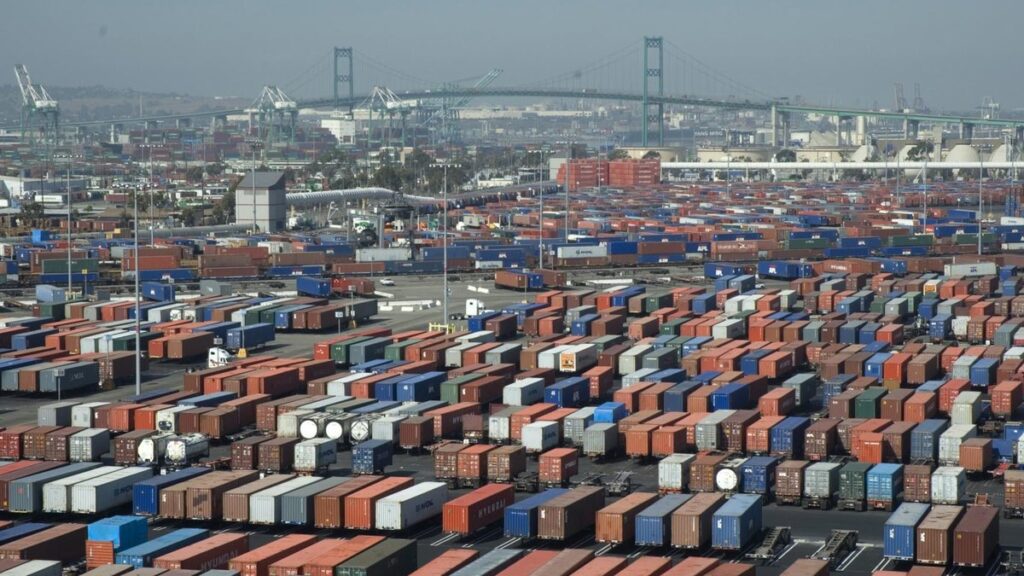
Photo: Charles Csavossy, U.S. Customs and Border Protection (public domain), via Wikimedia Commons (illustrative)
Try the Statadventure live tools
Inventory tools for US manufacturers: reorder point, safety stock, EOQ and landed cost, with the inputs and assumptions shown.
Open the live tools