
The Office of the U.S. Trade Representative (USTR) on November 25 made determinations in 14 of its 16 Section 301 investigations into structural excess capacity and proposed new tariffs on those economies, according to law firms Holland & Knight and Kelley Drye. Both firms cite a USTR press release. The proposals are not in force yet.
Our earlier report on the expected Section 301 tariffs described the findings as imminent. This post covers what USTR then published.
Proposed rates by economy
Kelley Drye lists the following proposed rates. Holland & Knight reports the same figures. Both say the rates are net of existing Section 301 duties, and for some economies net of the most-favored-nation (MFN) rate.
- 15%: European Union, Japan, Korea, Switzerland and Taiwan
- 18%: Bangladesh, Cambodia, Indonesia, Malaysia and Thailand
- 20%: Singapore
- 25%: India
- 35%: Vietnam
- China: 20% on most goods and 10% on goods listed in Annex A, with Annex B goods not subject to a new tariff (Kelley Drye)
Holland & Knight lists higher alternative rates for some economies, such as up to 25% for Korea and Taiwan and up to 40% for China. Kelley Drye says India, Singapore and Vietnam could receive lower rates of 17%, 10% and 20% if they reach bilateral agreements.
Stacking, exclusions and timing
Kelley Drye reports that the new tariffs would not stack on the 10% and 12.5% forced-labor Section 301 tariffs. For China, the new rates would stack on the earlier China Section 301 tariffs, the firm said. For non-China economies, they would not stack on Section 232 tariffs, Kelley Drye reported.
Holland & Knight says the 13 notices for economies other than China exempt articles already covered by Section 232 tariffs, such as steel, aluminum, copper and autos. They also exempt products listed in annexes. The firm notes the new tariffs largely replace those the U.S. Supreme Court struck down in February 2026.
Written comments and requests to appear are due January 5, 2027, both firms report. A public hearing is set for January 25, 2027. Neither firm gives an effective date. Kelley Drye says final rates would take effect at a later date. USTR has made no determination yet for Mexico or Norway, Kelley Drye reported.
What it means for manufacturers
The proposed rates differ by country, so the cost impact depends on where each part is made. Start with a list of purchased items by country of origin and HTS code, with annual spend. Remove lines that already carry Section 232 duties, which the firms say are treated separately.
Then test each item against the proposed rate. The free tariff cost calculator shows the added duty on a purchase. The landed cost calculator and our guide on how to calculate landed cost show how that duty changes unit cost and margin. These are our suggested steps, not guidance from USTR.
Rates could change before they take effect, since comments and a hearing come first. That window is the time to talk with suppliers about origin and pricing. See ways manufacturers reduce tariff costs and our supplier diversification strategy guide. Planners can keep these scenarios in one place with supply chain software.
Want to see what a 15%, 25% or 35% duty would do to your landed cost, item by item?
Contact usRelated news
- U.S. Set to Announce Section 301 Tariffs on China, EU and 14 Other Economies
- CBP’s CAPE Tool: How Importers Claim IEEPA Tariff Refunds
- U.S. and China Extend Trade Truce Until January 10
Get supply chain news like this by email: sign up for the Statadventure newsletter.
Sources
- Holland & Knight, “USTR Proposes Tariffs Following 14 Section 301 Manufacturing Excess Capacity Investigations” (Nov. 25, 2026)
- Kelley Drye, “USTR Proposes Section 301 Overcapacity Tariffs on 14 of 16 Economies Investigated” (Nov. 25, 2026)
Additional sources
- USTR, Section 301 structural excess capacity investigations page (checked Nov. 28, 2026), which lists notices of proposed actions and reports for 14 economies dated Nov. 25, 2026
- USTR press release cited by both law firms (not read directly by us)
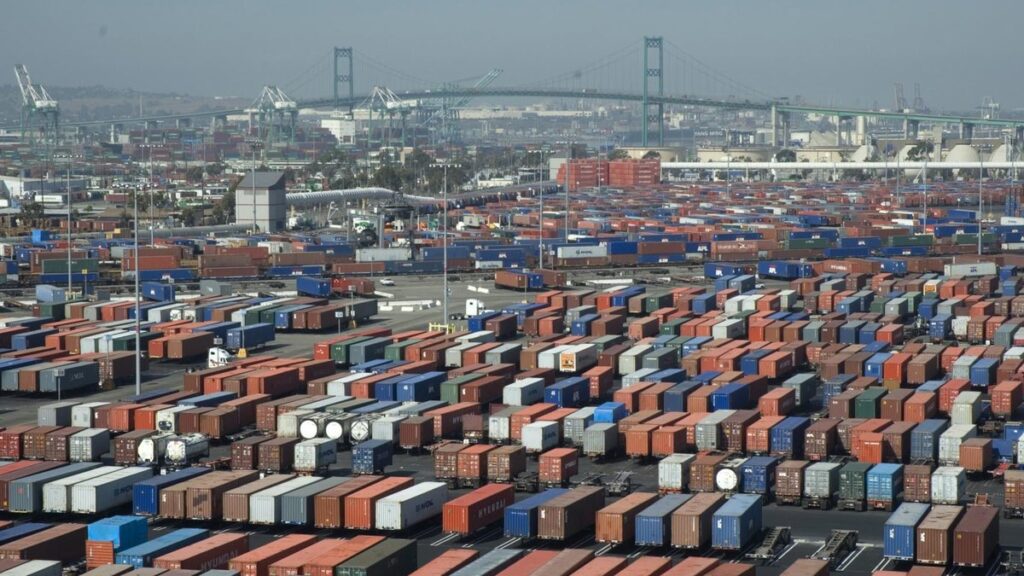
Photo: Charles Csavossy, U.S. Customs and Border Protection (public domain), via Wikimedia Commons (illustrative)
Try the Statadventure live tools
Inventory tools for US manufacturers: reorder point, safety stock, EOQ and landed cost, with the inputs and assumptions shown.
Open the live tools