
Aegis Software, a Horsham, Pennsylvania, maker of manufacturing execution and planning software, has launched four products from its Simio unit that use simulation to build production schedules. In its announcement, the company named them Simio Essentials, Simio Essentials Plus, Simio APS and Simio Virtual Factory Designer, and said they are meant for “manufacturers of every size.”
The approach differs from rule-based scheduling. Simio models a plant event by event against its equipment, labor, materials, changeovers and business rules, and Aegis said the resulting plan can be refreshed quickly when an order shifts, material arrives late or a machine goes down. Because the software works with ranges rather than single values, the company said, it shows how likely each order is to ship on time.
The AI comes in two forms, according to Aegis. Neural networks embedded in the simulation learn from simulated data and shop-floor context and make choices as the plan runs, such as picking a line for a job. Separately, built-in support for the Model Context Protocol lets assistants a company already uses, such as Claude Code, Codex and GitHub Copilot CLI, connect to the simulation so a planner can ask, “Which orders will be late, and why?”
Four levels
Simio Essentials and Simio Essentials Plus are built for customers of Aegis’s FactoryLogix MES. Aegis said Essentials needs no simulation expertise: it generates the model from FactoryLogix data, checks that the data it needs is present, and produces six standard dashboards after each run, covering schedule summary and detail, bottlenecks, order performance, a capacity heat map, and throughput and work in progress. Essentials Plus adds what-if analysis, plan comparison, expected demand and a longer horizon, so a planner can test an extra shift or a rush order before committing to it.
Simio APS, which handles labor, tooling and material-handling constraints, and Virtual Factory Designer, which models layouts before commissioning, can run with FactoryLogix or on their own.
“Disruptions in a factory are unplanned, but they are also likely, and a schedule built on a spreadsheet, institutional knowledge and luck cannot account for them,” said Dennis Pegden, chief product officer for APS and simulation at Aegis. Jason Spera, the company’s chief executive, said the offerings “put AI-driven, simulation-based planning within reach of manufacturers of every size.” The announcement did not include prices or customer results.
What it means for manufacturers
For a plant of 50 to 250 people, the useful test is not the label on the scheduler but whether the inputs are trustworthy. A simulation is only as good as its routings, bills of material, run rates and changeover times, and many midsize plants keep those partly in spreadsheets. Before evaluating any scheduling tool, check how a job’s due date is promised today; our guides to available to promise and clear to build cover the two checks most plants already run by hand.
If the current ERP or MRP system cannot produce a reliable plan at all, start there. Our page on MRP software for small manufacturers explains what basic planning software should handle before an advanced scheduling layer is worth adding.
Weighing a scheduling or planning tool for a midsize plant, and not sure whether your data is ready?
Contact usSources
Additional sources
- ASSEMBLY, “Aegis Now Offers AI, Digital Twin Simulation, Advanced Planning” (Nov. 18, 2026), which describes Simio as an Aegis subsidiary and restates the release.
- EMSNow, republished release (Nov. 19, 2026), which carries the company’s claim that most competing APS schedules need manual editing before use. That comparison is Aegis’s own and was not independently tested.
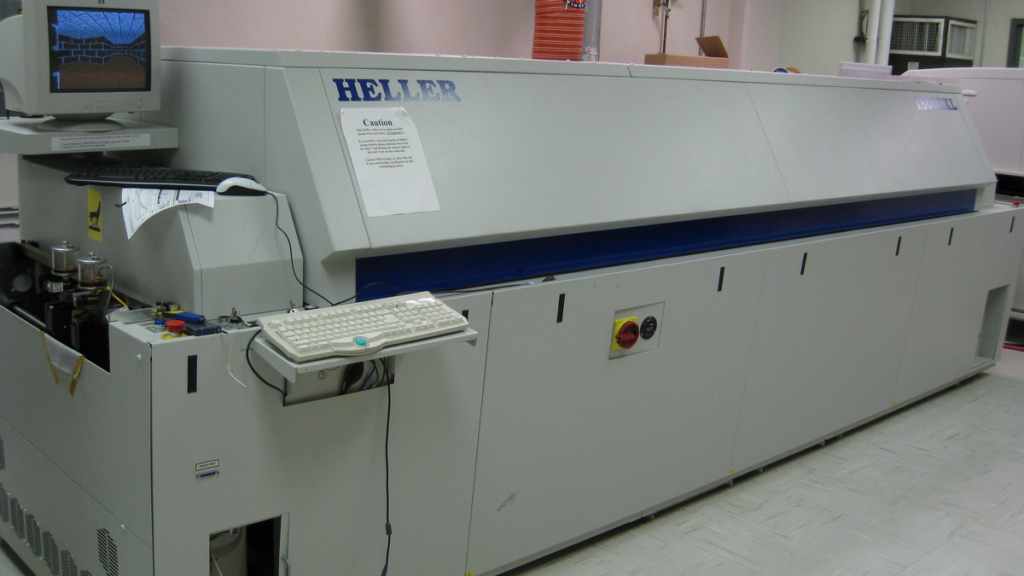
Photo: Nelatan, Wikimedia Commons, CC BY-SA 3.0 (illustrative)
Try the Statadventure live tools
Inventory tools for US manufacturers: reorder point, safety stock, EOQ and landed cost, with the inputs and assumptions shown.
Open the live tools