
GoodShip, a Bellevue, Washington, freight software company, said on November 18 that it has launched True Cost, a feature that adds expenses outside the contracted rate to the cost of moving each load. According to the company’s release, the feature is meant to inform carrier selection, procurement and financial planning, and it is available now.
The idea is that the cheapest rate on paper is not always the cheapest way to ship. With True Cost, a shipper writes rules for costs such as tender rejections, late deliveries, customer-specific penalties and equipment premiums. GoodShip’s AI assistant, which it calls Laney and describes as an “AI Transportation Analyst,” turns instructions written in plain language into those rules, previews their financial effect and then applies them across the network.
“Shippers have historically made multimillion-dollar transportation decisions based on paper rates and institutional knowledge,” said Ryan Soskin, GoodShip’s co-founder and chief executive. The company said the adjusted figures feed its existing network-optimization tools, so teams can compare lanes and carriers on the same basis and improve budgeting and cost-to-serve analysis.
The release did not name customers, disclose pricing or report results from shippers that have used the feature.
What it means for manufacturers
A midsize manufacturer does not need new software to apply the idea. Take last quarter’s loads for two or three carriers on a busy lane and add what each actually cost beyond the linehaul: replacement trucks after rejected tenders, expedites after late pickups, and any chargebacks a customer issued for late or short deliveries. If a large customer scores you on on-time, in-full delivery, our fill rate and OTIF calculator shows how many orders missed, which is the starting point for pricing those fines.
The same discipline applies to inbound freight. Our guide on how to calculate landed cost covers how freight and fees change the real cost of a part, and our note on October dry van spot rates gives recent market context for truckload pricing.
Want to know what your freight really costs once penalties, expedites and rejected tenders are counted?
Contact usSources
Additional sources
- GoodShip, True Cost product page (accessed Nov. 20, 2026), which lists sample rules such as a flat charge for each rejected tender, a percentage of linehaul for late deliveries, a fee per retailer OTIF miss and a reefer-monitoring premium per load. These are GoodShip’s illustrations, not industry benchmarks. The page also says rules can be edited, paused or resumed, and that Laney shows which rules contributed to each total.
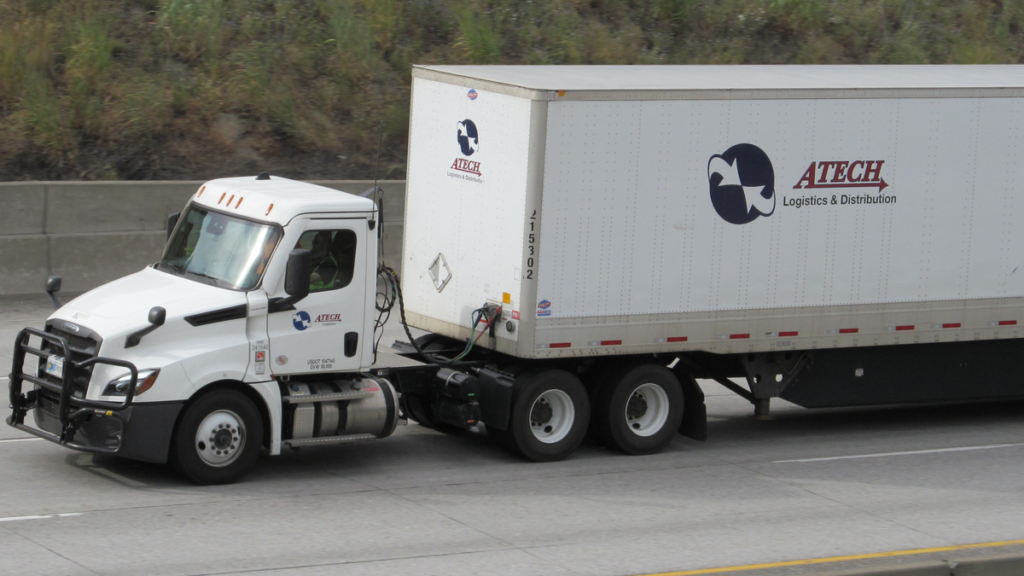
Photo: Ewkada, Wikimedia Commons, CC BY 4.0 (illustrative)
Try the Statadventure live tools
Inventory tools for US manufacturers: reorder point, safety stock, EOQ and landed cost, with the inputs and assumptions shown.
Open the live tools