
Nodal Networks, a Los Angeles company that builds AI software for container terminals, said on November 19 that it has raised $11.3 million in seed funding. The round was led by Eniac Ventures, with NewRoad Capital Partners joining and Riot Ventures, Trail Mix Ventures and Liquid 2 Ventures returning. The company said its total funding is now $14.5 million.
Nodal’s platform, Malcom, is named after Malcom McLean, the inventor of the modern shipping container. The company said it pairs AI agents with specialized forecasting models to help operators predict congestion, measure lost productivity and decide on container placement, equipment allocation and loading. It draws on data from existing systems, schedules, emails and operational messages, and terminal teams remain in control of the operation. Nodal said Malcom is deployed at terminals on three continents.
The company described two results. At one terminal, it said, truck time inside the facility during peak hours was cut in half after operators reassigned existing yard equipment. At another, ships are being loaded and unloaded 5% faster so far. Nodal also estimated that applying such changes across every shift could unlock up to 30% more terminal capacity. Those figures are the company’s own and were not independently verified.
“Watching ports through Earth-observation satellites, I started to see transport as a physical internet: containers are the data packets, ports and rail yards are the routers, and congestion is the lag,” said Paul Albert-Lebrun, Nodal’s co-founder and chief executive, who previously led product at Kepler Communications. Nodal said the funding will bring Malcom to more terminals and extend it to planning with shipping lines, railroads and trucking companies.
What it means for manufacturers
Importers do not buy terminal software, but they feel its effects in dwell time, appointment availability and demurrage. If a terminal can turn trucks faster, drayage carriers can make more turns a day, which matters most during peak season. Track how many days your containers sit at the port before pickup and what you pay in detention and demurrage; those numbers show whether port performance is a real cost driver for your business.
For more on West Coast port operations, see our note on the Los Angeles and Long Beach port talks. Our container load calculator helps make each box count, and our coverage of Freightos’s AI forwarder platform looks at AI on the booking side of ocean freight.
Paying more than expected in port fees, dwell time or ocean freight?
Contact usSources
Additional sources
- SiliconANGLE, “Nodal Networks raises $11.3M to solve global shipping bottlenecks” (Nov. 19, 2026), which attributes the release’s figure that only half of the world’s container ships arrived on time in September to the analytics firm Sea-Intelligence, and notes that Nodal did not say which terminals use Malcom.
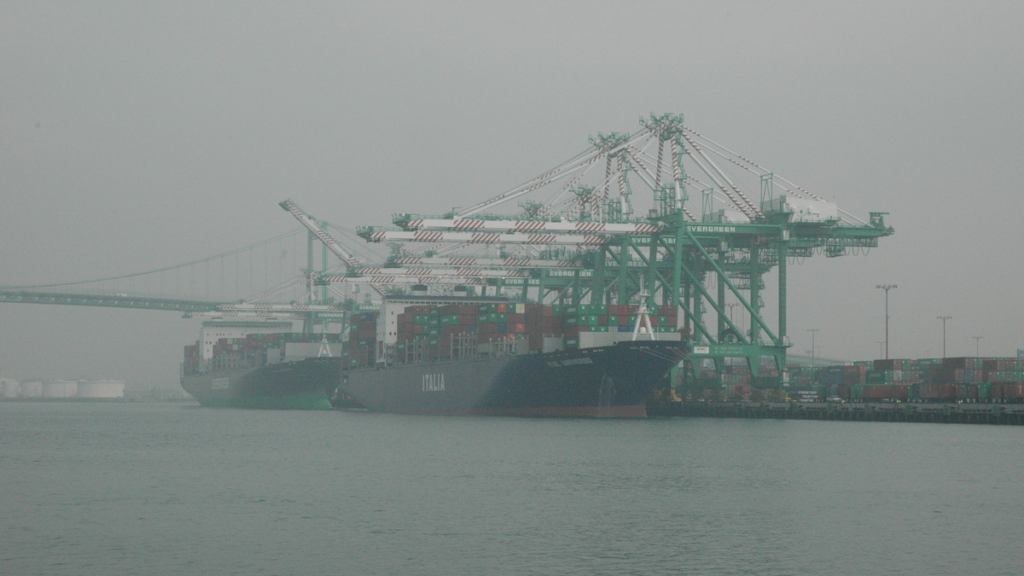
Photo: Marshall Astor, Wikimedia Commons, CC BY-SA 2.0 (illustrative)
Try the Statadventure live tools
Inventory tools for US manufacturers: reorder point, safety stock, EOQ and landed cost, with the inputs and assumptions shown.
Open the live tools